
Expanding the Footprint: How Mole Valley Turned Transparency into Climate Leadership
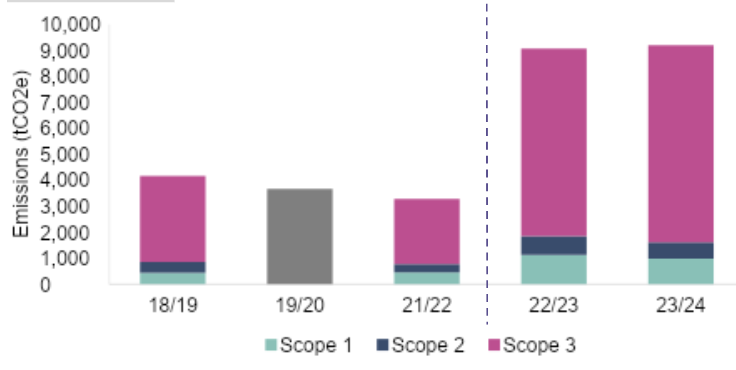
See how Mole Valley District Council partnered with CarbonTrack to expand its carbon footprint to cover all relevant sources of emissions. While this increased reported emissions compared to previous years, it reflected a stronger, more transparent methodology, enabling the Council to demonstrate accountability and strengthen its Climate Action Plan. By reframing this as a mark of leadership, CarbonTrack helped secure stakeholder buy-in and created a streamlined, evidence-based pathway to net zero.
Setting the Scene: Mole Valley’s Net Zero Commitment
Mole Valley District Council declared a climate emergency in June 2019, pledging to make its operations carbon neutral by 2030. Since then, the Council has taken progressive steps, establishing a Climate Change Strategy and Action Plan, and tracking its footprint annually. Recognising the importance of continuous improvement, Mole Valley commissioned CarbonTrack to provide a refreshed and enhanced emissions baseline – one that would account for all relevant sources, strengthen reporting accuracy, and ensure targets were grounded in evidence.
The Solution: Comprehensive Scope 3 Carbon Accounting
CarbonTrack’s role was threefold: to calculate the Council’s full Scope 1, 2, and 3 footprint; to assess the savings potential of actions within its Climate Action Plan; and to design a realistic roadmap to net zero. A highly granular, insight-driven analysis expanded the reporting boundaries to cover previously unmeasured sources, particularly procurement, capital goods, and leased assets. This approach provided the Council with its most comprehensive picture to date of where emissions arise across its operations.
The Challenge of Transparency: Why Reported Emissions Increased
The results were striking. Mole Valley’s reported emissions increased significantly compared to previous years. Far from signalling a rise in actual emissions, this reflected a more complete methodology: one that captured the true scale of the Council’s environmental impact.
From Data to Decisions: Establishing Climate Leadership
While reporting a larger footprint can be politically challenging, CarbonTrack supported the Council in reframing this outcome as an act of transparency and accountability. By taking ownership of its full impact – including emissions that were previously invisible – Mole Valley positioned itself as a leader in climate governance.

Strategic Decarbonisation: Streamlining the Climate Action Plan
CarbonTrack also reviewed the Council’s Climate Action Plan, streamlining over forty actions into fifteen high-impact measures grounded in materiality, feasibility, and cost-effectiveness. The revised plan prioritises emissions reductions in two critical areas: energy use across the Council’s estate and supply chain procurement. Through concentrating effort where it matters most, Mole Valley can maximise progress within available resources while maintaining credibility and alignment with its net zero pledge.

Mole Valley District Council’s Seven Key Action Pillars with the Addition of the Supply Chain