
Carbon Accounting for Public Sector Leaders
As a public sector leader, you are tasked with achieving Net Zero, a goal that requires audit-grade carbon data and a clear pathway to reduction. Our service provides the essential strategic framework and a comprehensive, robust baseline built from the ground up for local authorities.
Comprehensive Carbon Accounting for Local Authorities: Scopes 1, 2 & 3 Baseline
We’re more than just software. We’re your strategic partner across the entire net zero journey.
- Precision Measurements across Scopes 1, 2, and 3: We handle the complexity of emissions accounting so you don’t have to – especially when it comes to notoriously tricky Scope 3 data. Our methodology, built on 40,000+ emissions classifications, offers granular, science-based insights trusted by government bodies, regulators, and auditors alike.
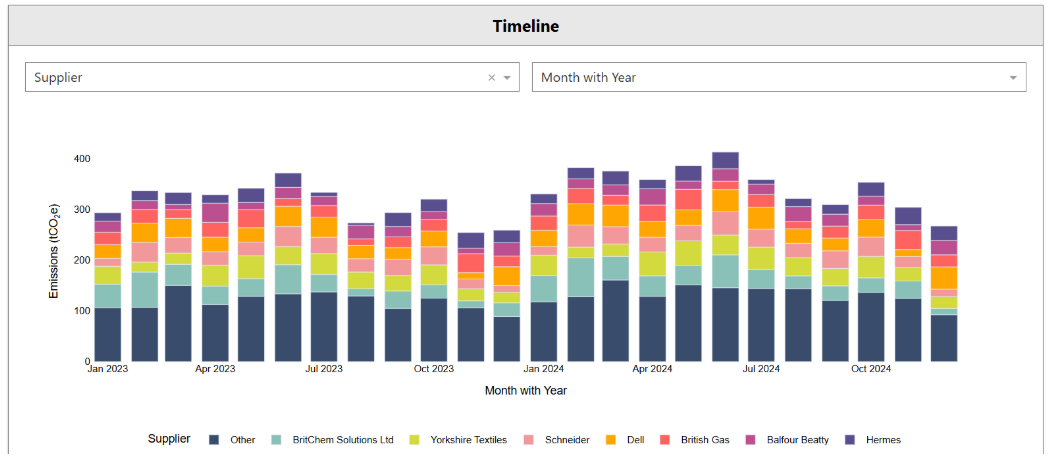
- Real-Time Tracking and Reporting: CarbonTrack’s digital platform keeps your emissions data live and actionable. Visual dashboards and team-specific insights foster cross-departmental ownership and transparency – crucial in the public sector. Monitor progress, set targets, and share results in a way that sticks.
- Supply Chain Visibility for Public Procurement: Procurement often accounts for 60-80% of a public body’s emissions. Our tools are built with this in mind, providing unmatched visibility into your supply chain and helping you engage suppliers, assess risk, and embed climate considerations into procurement decisions from day one.
Many local authorities have started to calculate Scopes 1 and 2 emissions, and many report basic Scope 3 categories like waste and business travel. But the largest emissions, from procurement and leased estates, remain unmeasured. Without a complete baseline, you cannot credibly demonstrate progress toward net zero, identify reduction priorities, or allocate resources effectively.
We partner with you to deliver a comprehensive, highly granular Scopes 1, 2, and 3 baseline through expert-led analysis combined with powerful analytical tools. Our consultancy approach means:
- You’re Not Alone – Your dedicated consultant guides you through data collection, interpretation, and strategic planning.
- Tailored to Your Context – We adapt our methodology to your data systems, political environment, and organisational capacity.
- Built for Action – We don’t just calculate emissions; we work with you to identify priorities, build stakeholder buy-in, and plan realistic pathways to reduction.
- Capacity Building – We train your team so they can maintain and update the baseline independently.
Beyond Reporting: Carbon Accounting and the CarbonTrack Difference
1. Consultancy-First: Dedicated Expert Guidance, Not Just Software
We’re not a self-service platform. Your dedicated consultancy team:
- Conducts discovery sessions to understand your operations and data landscape
- Manages data collection and classification processes
- Presents findings to leadership and members
- Facilitates workshops to interpret results and set priorities
- Provides ongoing strategic support as your program evolves
2. Specialist Classification for Local Authorities
We classify spend using frameworks designed for local government, not generic business categories. Our emission factors reflect the specific mix of services councils procure: residential care, highway maintenance, waste contracts, etc.
3. Interactive Dashboards with Expert Interpretation
Raw data isn’t useful. Our tools allow your team to:
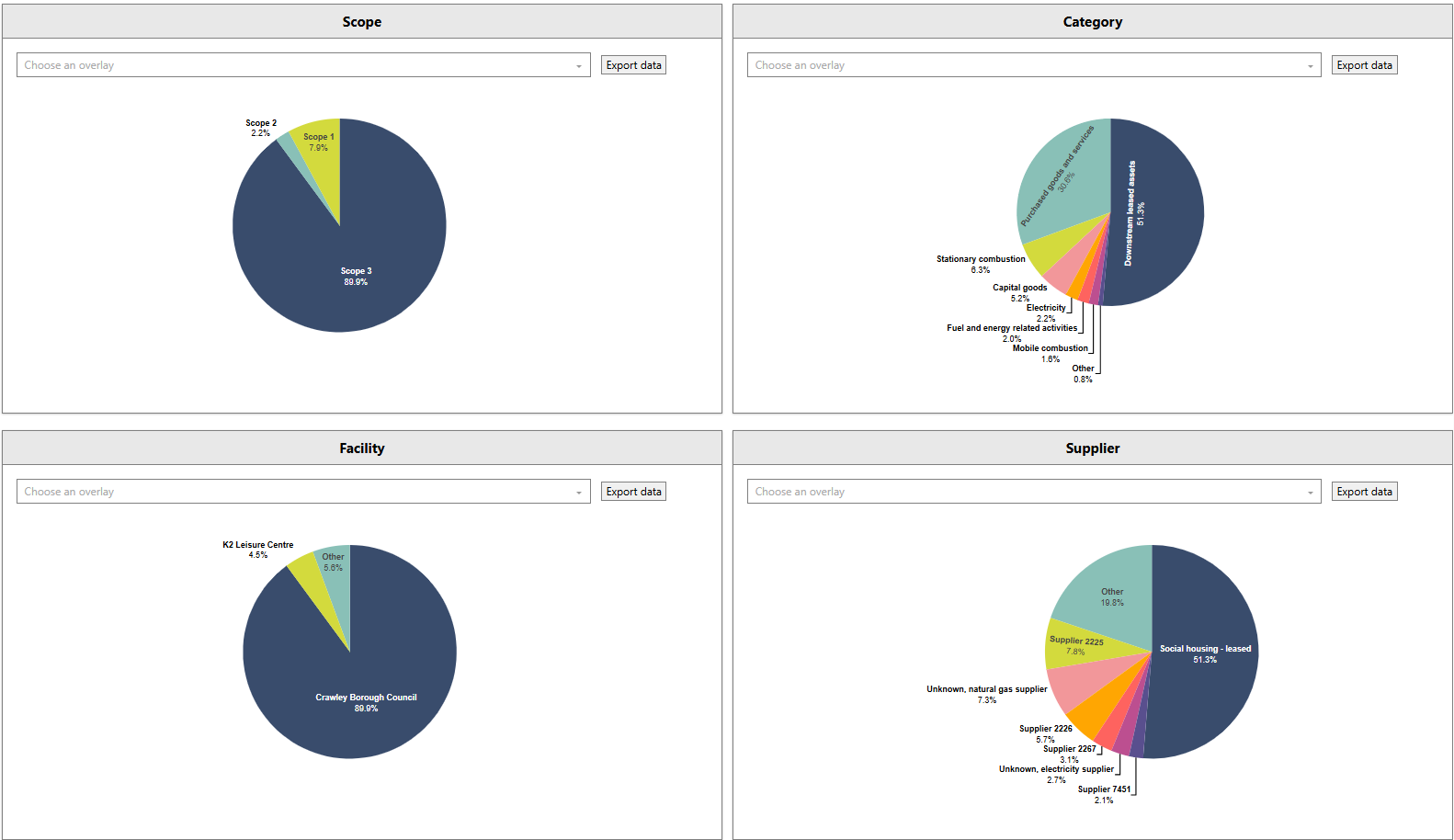
- Identify material emission hotspots instantly
- Filter by department, supplier, or category
- Track progress over time
- Drill down from headline figures to individual transactions
But these dashboards come with expert interpretation – we show you what the data means and what to do with it.
4. Actionable Intelligence for Strategic Decarbonisation
We don’t just tell you your footprint, we show you where to focus:
- Which suppliers drive 70%+ of supply chain emissions
- Which procurement categories offer the highest reduction potential
- How your footprint compares to peer authorities
- What your trajectory to net zero actually requires
5. Evidence-Based Pathway Planning and Modelling
Using your baseline, we work with you to model:
- Realistic abatement projections by category and timeline
- Cost implications of different reduction scenarios
- Resource allocation requirements
- Risk identification and mitigation strategies
- Stakeholder communication strategies
This isn’t a report you’re left to figure out – we facilitate decision-making sessions with your team to turn analysis into action plans.